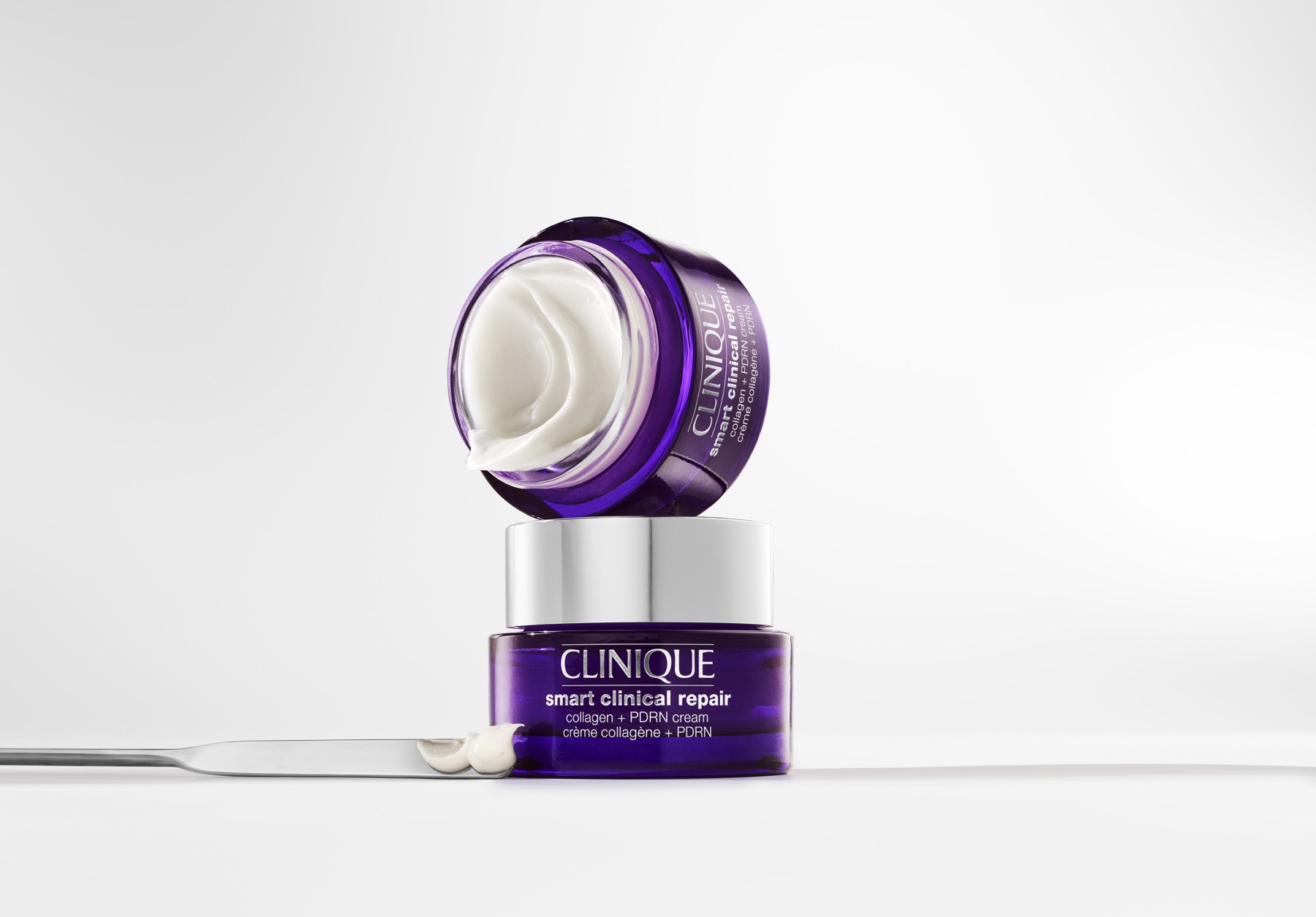
A scientific-sounding ingredient can make a moisturiser feel like an appointment. Clinique’s Smart Clinical Repair Collagen + PDRN Cream is a good moment to separate those two experiences. It is listed on the brand’s UK website at £60 for 50ml, with an Add to Bag option when checked on 26 October. This is a product-page analysis, not a wear test.
Clinique says its PDRN is biotech-derived from cica and used topically. The formula also lists collagen, peptides, glycerin and sodium hyaluronate. Plant-derived PDRN does not, by itself, establish that the entire cream is vegan: the ingredient list includes whey protein. Nor does an ingredient’s association with injectable treatments turn a jar into an equivalent procedure.
The small print is refreshingly specific about some things. The one-use claims for plumper-looking, firmer-feeling, bouncier skin refer to a consumer trial involving 24 women. The four-week texture and radiance claims refer to 35 women. These describe experience with the finished product; they do not isolate what PDRN contributed. The public summary does not set out a comparison against the same cream without PDRN. Clinique UK’s product details and consumer-trial footnotes.
That is not a reason to dismiss a pleasant moisturiser. It is a reason to keep the conclusion the right size. “People liked how their skin felt” and “this particular ingredient caused a structural change” are different propositions. A good consumer result can be useful without being promoted into a more ambitious kind of evidence. Equally, an absent detail on a retail page is not proof that a company has never studied it.
There is emerging topical research, so a blanket dismissal would be too simple. A paper published on 24 December 2025 investigated low-molecular-weight PDRN from peony, including a small, four-week clinical study in ten Korean participants and instrument-measured skin elasticity. Its authors were affiliated with NewLife BST. That is a different botanical source and test formulation, not a trial of this Clinique cream. Interesting findings cannot be transferred automatically between jars sharing an acronym. Bak and colleagues’ peony-derived PDRN study.
The timing needs similar care. Clinique’s Japanese announcement, dated 25 August, specified a 9 October 2026 launch there under the Smart Repair CL+PD name. That is not a verified British launch date. The UK listing establishes current availability, not the day it first arrived. Clinique’s Japanese announcement.
The useful question is less glamorous than the ingredient: what was tested, on whom, against what, and what actually changed? Read those answers before allowing a fashionable acronym to do all the selling. A cream can earn its place through everyday pleasure and visible cosmetic results. It should not need an imagined medical backstory.