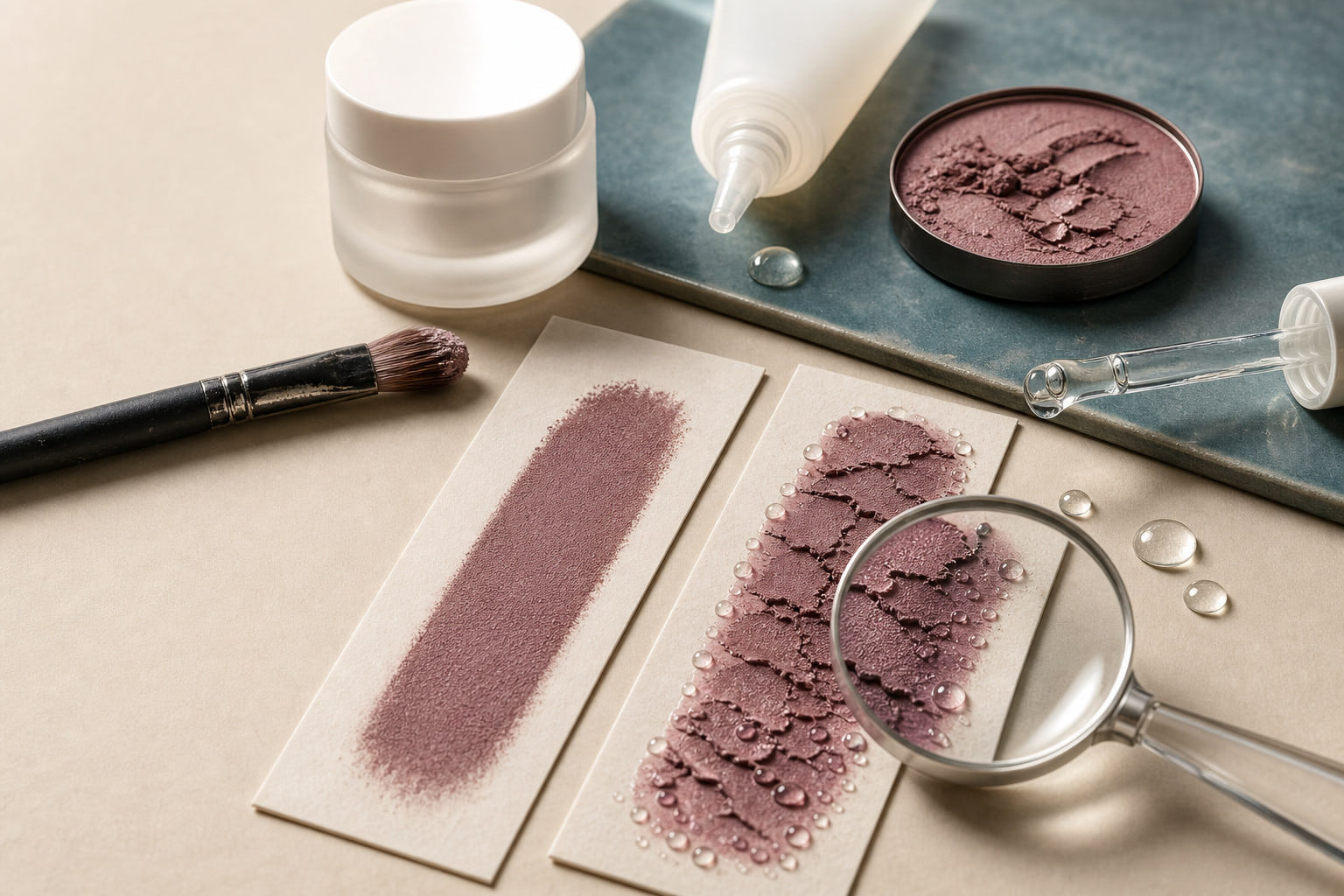
Primer can feel like backstage magic: a thin slick, a brush of colour, and you expect shadow to sit put. Then midday arrives and your carefully blended crease is suddenly a darker line. Before blaming your technique or buying another product, check what your primer actually asks you to do.
No single routine can promise crease-free eyeshadow for everyone. The useful starting points are the product’s directions, the amount applied and the time it needs to dry. We have not carried out wear testing for this article.
- Preparation: follow the primer’s directions rather than assuming every trace of moisturiser must be removed.
- Amount: check the recommended application; a fixed pea-size dose is not a rule for every formula.
- Drying time: give the primer the time its maker specifies before adding eye makeup.
- Product pairing: check how your chosen primer and shadow are intended to be used. Water-, silicone- or oil-based labels alone do not establish whether a pairing will work.
A practical routine to try
- Prepare as directed. Urban Decay’s Primer Potion guide says to start with clean lids, pat dry and moisturise if needed. That is different from a blanket instruction to strip away all skincare.
- Apply a small amount where directed. Urban Decay advises a small amount, smoothed and patted into an even layer. Use your own product’s instructions rather than a universal dose.
- Allow the primer to dry. Urban Decay says to let it dry before finishing the eye look. MAC’s Prep + Prime 24-Hour Extend Eye Base directions specify a minute before applying eye makeup. That timing belongs to the named product, not every primer.
- Check before adding powder. Neither of those application guides prescribes an extra powder-setting step. Don’t treat powder over primer, or powder over every cream shadow, as compulsory. Follow the directions for the products you use.
- Build in thin washes. Try light passes and add colour gradually, checking the finish before adding more. Use a brush that lets you place colour where you want it.
- Keep finishing steps product-specific. A setting spray is optional, not a guaranteed fix. Only use a product as directed, including any instructions for use near the eyes.
- For a midday touch-up: inspect where colour has collected before adding more. Try a small adjustment rather than automatically layering on primer or powder.
If your upper lid folds over the socket, try checking colour placement with the eye open. You might prefer to place some colour above the fold so it remains visible. Thin layers are worth trying, but lid shape or age does not make powder compulsory or rule out every cream formula.
If a particular combination keeps disappointing you, change one product or step at a time and compare the result. Check the manufacturer’s guidance for that formula. A long-wear claim belongs to the product and its stated conditions; it is not a guarantee for every lid or combination.
Quick troubleshooting
- Shadow smudges immediately: check the amount applied and the primer’s drying directions before assuming more powder is needed.
- Colour fades or gathers in a line: a visible change alone does not identify the cause. Try a thinner application and compare one change at a time.
- Shimmer looks more textured than you want: try a smaller amount or different placement. Only dampen a brush if the shadow’s instructions allow wet use.
- Primer pills or separates: check the application directions and try changing one layer. Don’t diagnose the cause from base-ingredient labels alone.
- More primer must mean longer wear. Follow the recommended amount rather than assuming that extra product will improve it.
- One routine works for every lid. Treat these as adjustments to try, not a promise of crease-free wear.
Sources and scope
The linked Urban Decay and MAC pages are primary manufacturer instructions for those named products. This is application guidance, not an independent wear test. It does not establish a universal cause of creasing or guarantee that any routine will prevent it.